

Why Does One Tooth Feel Higher Than the Others When You Bite?
Have you ever closed your mouth and noticed one tooth seems to touch first? It may suddenly feel taller or higher than the surrounding teeth.
This sensation can be surprisingly uncomfortable. Your bite is designed to distribute pressure across your teeth, so even a small change can feel noticeable.
Sometimes the cause is simple, such as a recent filling that needs adjustment. In other situations, inflammation, grinding, or a dental problem may be involved.
If a tooth suddenly feels different when you bite, a Coquitlam dentist can examine the area and determine the cause.
What Does a “High Tooth” Actually Mean?
A tooth does not necessarily become physically taller overnight. Instead, something may have changed how your upper and lower teeth meet.
You might notice one tooth making contact before the others when you close your mouth.
The tooth may also feel tender when chewing or clenching.
Because your bite is sensitive to small changes, even a minor difference can become difficult to ignore.
1. A Recent Filling May Feel Too High
Have you recently had a filling? Your bite may feel slightly different after the procedure.
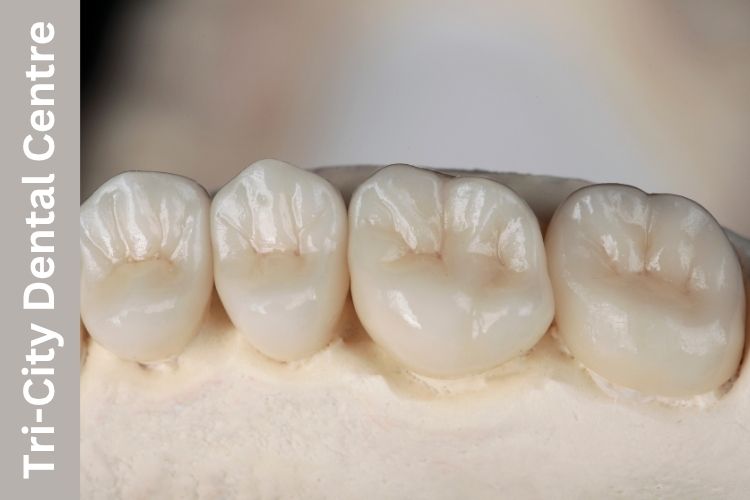
A dental filling is shaped to restore the damaged portion of your tooth. Its biting surface must also fit comfortably against the opposing teeth.
If the restoration creates premature contact, that tooth may receive extra pressure when you bite.
Do not try to “wear it down” yourself. Contact your dental office if your bite continues to feel uneven.
2. A Crown Can Change How Your Bite Feels
A dental crown restores the shape and function of a damaged tooth.
Like a filling, a crown needs to work with your existing bite. If something feels different after treatment, tell your dentist.
Your dentist can check the contact points and determine whether an adjustment is appropriate.
You can learn more about restorative options on our dental services page.
3. Teeth Grinding or Clenching May Be Involved
Grinding and clenching can place significant pressure on your teeth and supporting tissues.
Some people clench during stressful situations. Others grind their teeth while sleeping and may not realize it.
You might wake with jaw fatigue, headaches, or teeth that feel tender when biting.
Your dentist can look for signs of tooth wear and other changes associated with grinding.
4. Inflammation Around a Tooth Can Change the Sensation
Each tooth is supported by tissues that help connect it to the surrounding bone.
When these tissues become irritated or inflamed, a tooth can sometimes feel different during biting.
The sensation may be described as pressure, tenderness, or feeling that the tooth contacts first.
This symptom should be evaluated if it persists or becomes painful.
5. A Cracked Tooth May Hurt When You Bite
Cracks can vary greatly in size and severity. Some produce obvious symptoms, while others are difficult to identify without an examination.
A cracked tooth may cause discomfort when biting or releasing pressure.
You might also experience sensitivity to temperature.
Not every painful bite means the tooth is cracked. A professional assessment is needed to identify the cause.
Could a Dental Infection Make a Tooth Feel High?
In some cases, inflammation associated with an infection can make a tooth feel tender or unusually prominent during biting.
Other symptoms may include:
- Persistent toothache
- Swelling around the tooth or gums
- Sensitivity to hot or cold
- Pain when chewing
- A bad taste in the mouth
- Swelling of the face or jaw
Dental infections should not be ignored. They require professional evaluation and appropriate treatment.
If you are searching for an emergency dentist near me because of significant pain or swelling, contact a dental professional promptly.
Can Food Stuck Between Teeth Change Your Bite?
Sometimes food becomes firmly wedged between neighbouring teeth. This can create pressure and make the area feel unusual.
Gently cleaning between the teeth may resolve the sensation when trapped food is responsible.
However, repeated food trapping in the same location can indicate another dental concern.
A dentist can check for changes involving tooth contacts, restorations, decay, or the gums.
Why You Should Not Adjust the Tooth Yourself
A tooth that feels too high can be frustrating, especially when every bite reminds you of it.
Never file, sand, or attempt to reshape a natural tooth or dental restoration yourself.
Removing tooth structure incorrectly can cause permanent damage.
Your dentist uses specialized materials and techniques to evaluate how your teeth meet.
When Should You Book an Appointment?
A minor temporary change after dental treatment may settle as numbness disappears and your mouth adjusts.
However, persistent or worsening symptoms should be evaluated.
Consider contacting your dentist if:
- One tooth consistently touches before the others.
- Your bite changed after a filling or crown.
- You have pain when chewing.
- The tooth is sensitive to pressure.
- You notice swelling around the tooth.
- You have ongoing temperature sensitivity.
- Your tooth feels loose.
- Your symptoms are becoming worse.
If you need urgent dental care in Coquitlam, describe your symptoms when contacting the dental office. This information can help the team understand your situation.
How Does Your Dentist Check an Uneven Bite?
Your dentist will first ask when you noticed the change and whether you recently received dental treatment.
The tooth and surrounding tissues can then be examined for signs of damage, inflammation, or other concerns.
Your dentist may also evaluate how your teeth contact when you close and move your jaw.
Dental X-rays or additional testing may be recommended when clinically appropriate.
The treatment will depend on the underlying cause rather than the sensation alone.
Can You Prevent Bite Problems?
Not every bite change can be prevented. However, protecting your teeth can reduce several common risks.
- Attend regular dental examinations.
- Tell your dentist when a new restoration feels uncomfortable.
- Avoid chewing ice and other very hard objects.
- Discuss grinding or clenching symptoms with your dentist.
- Maintain good brushing and interdental cleaning habits.
- Seek care when a tooth develops unexplained pain.
Early assessment can often prevent a minor concern from becoming more complicated.
For more practical dental information, visit the TriCity Dental Centre oral health blog.
Listen When Your Bite Suddenly Feels Different
Your teeth meet thousands of times during everyday chewing, swallowing, and speaking.
That is why a small bite change can become noticeable very quickly.
A tooth that feels high does not reveal the cause by itself. It could involve a restoration, clenching, inflammation, or another dental condition.
Instead of waiting for significant pain, have a persistent change evaluated.
Does one tooth suddenly feel higher than the others? Contact TriCity Dental Centre to request an appointment.
TriCity Dental Centre
1111 Ponderosa St., Coquitlam BC
(604) 942-4242
www.tricitydentalcentre.com