

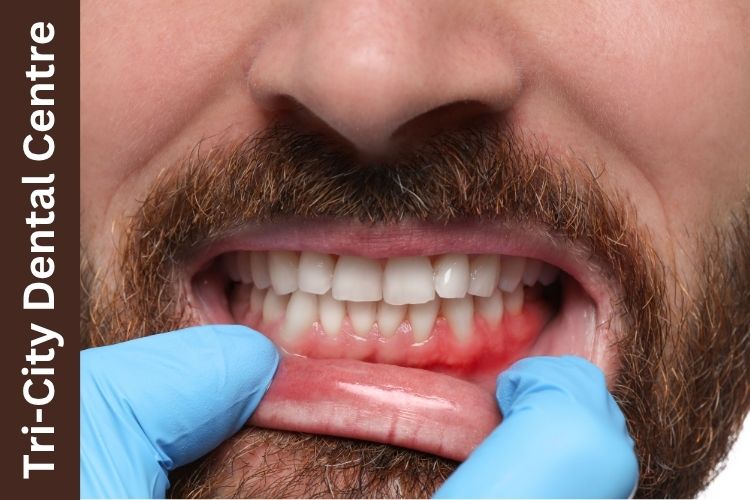
Why Do My Gums Bleed If They Don’t Hurt? What You Should Know
You finish brushing your teeth and notice a little pink in the sink. Your gums do not hurt, so should you be concerned?
Bleeding gums can be easy to dismiss when there is no discomfort. However, healthy gums generally should not bleed regularly during gentle brushing or flossing.
There are several possible reasons for bleeding gums. Some are related to oral hygiene, while others require professional evaluation.
If bleeding keeps happening, a Coquitlam dentist can examine your gums and help identify the cause.
Why Can Gums Bleed Without Pain?
Gum problems do not always cause pain during their early stages. This means bleeding may appear before you notice significant discomfort.
One common reason is inflammation caused by plaque accumulating around the gumline.
Plaque is a sticky bacterial film that continually forms on your teeth. Without effective cleaning, it can irritate the surrounding gum tissue.
Your gums may then become red, swollen, tender, or more likely to bleed.
Could It Be Gingivitis?
Gingivitis is an early form of gum disease involving inflammation of the gums.
Possible signs can include:
- Bleeding while brushing
- Bleeding during flossing
- Red or swollen gums
- Tender gum tissue
- Persistent bad breath
Gingivitis can sometimes develop with little or no noticeable pain.
This is one reason bleeding should not be ignored simply because your mouth feels comfortable.
Can Starting to Floss Make Your Gums Bleed?
You might notice bleeding after beginning a new flossing routine. This is especially common if you have not cleaned between your teeth regularly.
Plaque and gum inflammation may already be present in these areas.
Consistent and gentle cleaning may help improve gum health over time. However, persistent bleeding should be discussed with your dental team.
Do not stop cleaning between your teeth simply because you see a small amount of blood.
Your dental hygienist can demonstrate an appropriate technique for your mouth.
Are You Brushing Too Hard?
More pressure does not necessarily mean cleaner teeth.
Using excessive force or a hard-bristled toothbrush may irritate your gums. Aggressive brushing can also contribute to gum recession over time.
Use a soft-bristled toothbrush unless your dental professional recommends otherwise.
Gentle technique and thorough coverage are more important than heavy pressure.
If you are unsure about your brushing technique, ask your dental team during your next visit.
What Does Tartar Have to Do With Bleeding Gums?
Plaque that remains on the teeth can eventually harden into tartar, also called calculus.
Once tartar develops, regular brushing and flossing cannot effectively remove it.
Hardened deposits around the gumline can make maintaining healthy gums more difficult.
Professional dental cleaning is used to remove these deposits from appropriate tooth surfaces.
You can explore our dental services to learn more about preventive dental care.
Could Bleeding Gums Become a Bigger Problem?
Ongoing gum inflammation deserves attention. Untreated gum disease can progress and affect the tissues supporting your teeth.
More advanced periodontal disease can involve changes to the gums and supporting bone.
Possible warning signs may include:
- Persistent gum bleeding
- Gum recession
- Swollen or tender gums
- Persistent bad breath
- Changes in your bite
- Loose teeth
Early assessment allows your dentist to determine the condition of your gums before deciding what care is appropriate.
Can Other Factors Contribute to Gum Bleeding?
Not every case of bleeding gums is caused by the same problem.
Changes in oral hygiene, certain medications, dental appliances, and other health factors may influence gum bleeding.
For this reason, avoid trying to diagnose persistent bleeding yourself.
Tell your dentist about medications and relevant changes in your health history during your appointment.
Why Regular Dental Cleanings Matter
Daily brushing and cleaning between your teeth are essential, but professional care serves a different purpose.
A dental hygienist can remove hardened deposits that cannot be removed effectively at home.
Your dental team can also monitor changes in your gum health over time.
For patients searching for family dentistry near me, preventive visits provide an opportunity to address concerns before they become more complicated.
How Can You Support Healthier Gums at Home?
A consistent routine can help control plaque and support your gums between dental visits.
- Brush twice each day for two minutes.
- Use a soft-bristled toothbrush.
- Clean between your teeth every day.
- Use fluoride toothpaste.
- Avoid tobacco products.
- Maintain regular dental examinations and cleanings.
Your dental professional may recommend additional products based on your individual needs.
For more practical oral health advice, visit our dental health blog.
Should You Use Mouthwash for Bleeding Gums?
Mouthwash can be useful for some patients, but it should not replace brushing or interdental cleaning.
Different rinses have different purposes. The right product depends on your oral health needs.
Ask your dentist or hygienist before relying on a rinse to manage ongoing gum bleeding.
Covering up symptoms without identifying their cause may delay appropriate care.
When Should You See a Dentist About Bleeding Gums?
An isolated episode of minor bleeding does not always indicate a serious problem.
However, repeated or unexplained bleeding deserves a professional assessment.
Consider booking an appointment if:
- Your gums bleed regularly.
- The bleeding continues despite careful oral hygiene.
- Your gums appear red or swollen.
- You notice gum recession.
- You have persistent bad breath.
- A tooth feels loose.
- You notice pus or significant swelling.
If bleeding is heavy, unexplained, or difficult to stop, seek appropriate medical or dental advice promptly.
Why Early Gum Care Matters
Waiting for gum pain is not a reliable way to decide when you need dental care.
Some gum problems can develop quietly. Bleeding may be one of the first changes you notice.
A trusted family dentist near you can assess your gums and recommend care based on the findings.
Preventive care can also help you understand which areas need more attention during your home routine.
Don’t Ignore What Your Gums Are Telling You
Seeing blood when you brush or floss does not automatically mean you have advanced gum disease.
However, regularly bleeding gums should not become your normal.
At TriCity Dental Centre, we can examine your teeth and gums, review your oral hygiene, and discuss appropriate next steps.
Have you noticed recurring gum bleeding? Contact TriCity Dental Centre to schedule your dental visit.
TriCity Dental Centre
1111 Ponderosa St., Coquitlam BC
(604) 942-4242
www.tricitydentalcentre.com