

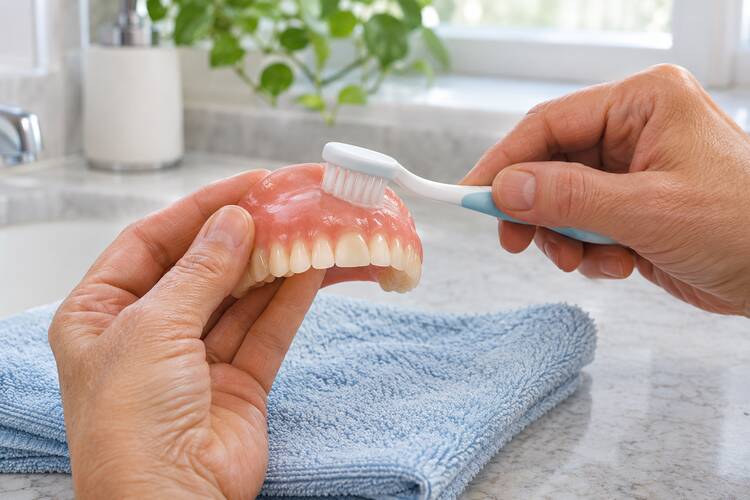
A denture can look clean after a quick rinse while still needing a more thorough daily routine. Learning how to clean removable dentures means caring for both the appliance and the mouth underneath it.
Whether you wear a full or partial denture, the materials and attachments matter. Use the instructions from your dental team as your starting point, and ask before trying a new soaking solution or cleaning product.
Start with a gentle daily clean
The Canadian Dental Association recommends daily denture cleaning. Plaque can collect on removable dentures, just as it can on natural teeth. A rinse removes loose debris, but does not replace brushing.
- Prepare a safe place. Work over a folded towel or a sink containing water so a dropped denture has a softer landing.
- Remove and rinse. Take the denture out of your mouth and rinse away loose food.
- Brush gently. Use a denture brush or soft-bristled toothbrush with a suitable denture cleanser or mild soap.
- Reach every surface. Clean the inside as well as the visible teeth, taking care around clasps and attachments.
- Rinse thoroughly. Remove cleanser before putting the appliance back into your mouth.
Choose a time when you can handle the denture without rushing. Keep your supplies together so the routine is easier to repeat.
Why ordinary toothpaste is not the best choice
Products suitable for natural teeth are not automatically suitable for denture materials. The CDA cautions that regular toothpaste and household cleaners can be too abrasive for dentures. Hard scrubbing is not a shortcut to a cleaner appliance.
If your denture has a soft lining, metal parts or special attachments, ask which cleaner is appropriate. Bring the product container to a visit if you are unsure. Avoid guessing from a label that simply says “antibacterial.”
What should happen overnight?
The usual routine is to remove dentures at night to let your mouth rest. Follow any specific instructions given after a new denture is fitted or after an extraction.
Keep the denture moist when it is out of your mouth. The CDA advises against hot water because it can affect the appliance’s shape. For dentures with metal clasps, its guidance recommends warm water alone for soaking, as some solutions can tarnish metal.
Ask your dental team to confirm a storage method for your particular denture. Keep it in a secure place where it will not be knocked over or mistaken for something else.
Clean your mouth as well as the denture
Removing the appliance gives you access to the tissues underneath. The American Dental Association’s denture guide recommends using a soft brush to clean the gums, tongue and roof of the mouth. Gentle cleaning remains important even if you have no natural teeth.
If you wear a partial denture, continue caring for the teeth that remain. Ask your dental hygienist to show you how to clean around the teeth supporting the clasps. Your home routine should fit the spaces you actually have, rather than relying on a generic demonstration.
When should you ask for a review?
Contact your dental team if the denture rubs, slips, breaks or feels different. Explain where it bothers you and when the problem started. Bring the appliance, even if you have stopped wearing it.
Do not file the denture, bend its clasps or attempt a repair yourself. The ADA’s partial denture guidance explains why professional adjustment matters. A home alteration can damage the fit rather than solve the problem.
Keep the examination schedule your dentist recommends. A denture-care visit is also an opportunity to check the mouth and discuss changes in comfort, not just to look at the appliance.
Frequently asked questions
Does soaking replace brushing?
No. Daily brushing removes deposits from denture surfaces. Soak only as directed for your appliance and product, and rinse before wearing it again.
Can I use a denture cleanser as mouthwash?
No. Denture cleansers are for use outside the mouth. Do not swallow, gargle or chew them. Follow the directions and keep the product out of children’s reach.
What if my partial denture has metal clasps?
Ask which cleaner and storage method suit the metal and any other materials. Do not bend a clasp to make it feel tighter. Arrange a fit check instead.
Does this routine apply to a fixed implant bridge?
This article is about appliances you can remove yourself. If you have a fixed restoration, ask for a cleaning demonstration designed for it. Do not try to remove a fixed appliance.
Make your routine easier with a demonstration
At your next visit to Tri-City Dental Centre, bring your denture, brush and cleanser. Ask the team to show you any areas you may be missing and to explain your overnight care instructions.
Learn about our general and family dentistry services, or contact us to request an appointment. Call (604) 942-4242 or visit Tri-City Dental Centre at 1111 Ponderosa St., Coquitlam, BC V3B 7L3.
This article provides general information. Follow the care instructions given for your own denture and dental health.