

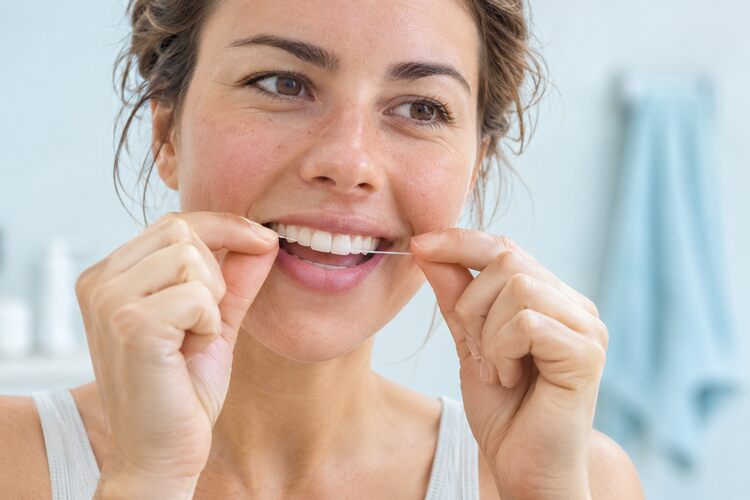
You brush morning and night, but the dental-care aisle raises another question: should you use string floss, an interdental brush or a water flosser? Cleaning between teeth is part of daily oral care, and the right tool depends on the spaces in your smile, any dental work and what you can use comfortably.
There is no single tool that suits every mouth. This guide explains the differences so you can have a more useful conversation with your dentist or dental hygienist in Coquitlam.
Why cleaning between teeth matters
A toothbrush cleans the exposed surfaces of your teeth, but its bristles cannot reliably reach every surface between them. Plaque can collect in these spaces even when you cannot see food stuck there.
Daily interdental cleaning helps remove plaque and food particles. It complements brushing twice daily with fluoride toothpaste. It also helps manage the buildup that can irritate gums. Once plaque hardens into tartar, home tools cannot remove it; professional cleaning is needed.
A quick comparison of your options
| Tool | May suit | Keep in mind |
|---|---|---|
| String floss or dental tape | Teeth with tight contacts | Curve it around each tooth instead of snapping it into the gums. |
| Interdental brush | Spaces large enough for a small brush | Ask for help selecting the size; never force it through. |
| Water flosser | Difficulty handling floss, or some braces and bridges | Choose an appropriate device and follow guidance on the tip and settings. |
When is string floss a useful choice?
Floss is a practical option when neighbouring teeth touch closely. Dental tape is a wider, flatter alternative that some people find easier to handle.
The goal is to clean the side of each tooth, rather than simply passing a strand through the gap.
- Gently guide the floss between two teeth. Avoid snapping it downward.
- Curve it into a C shape against one tooth and gently move it up and down along that surface, reaching just beneath the gumline.
- Repeat against the other tooth in the same space.
- Move to a clean section as you continue, including the back surfaces of your last teeth.
If handling a long strand is difficult, ask whether a floss holder would help. A short demonstration can make the technique much clearer.
When might an interdental brush work better?
An interdental brush looks like a tiny bottle brush. It can be useful where there is enough room between teeth, including some spaces around dental work.
Fit matters. A brush that is too small may not clean effectively, while an oversized brush can be uncomfortable. You may need more than one size for different parts of your mouth. Let your dental hygienist show you which sizes and angles suit your teeth, and do not push a brush through a tight contact.
If you have implants, ask about a brush specifically suitable for cleaning around them. The design and technique should match your restoration.
Can a water flosser help?
A water flosser directs a stream of water between and around teeth. It may make daily cleaning easier if limited hand movement makes string floss difficult, or if braces or a fixed bridge complicate access.
Devices with the American Dental Association Seal of Acceptance have been evaluated for safety and effectiveness in removing plaque and helping reduce gingivitis. This does not mean every device or setting is suitable for every person.
Ask your dental team about an appropriate tip, pressure and technique. Follow the manufacturer’s cleaning instructions. Water flossing is an interdental-cleaning option; you still need to brush your teeth and attend recommended dental visits.
Do you need to use all three?
Not necessarily. Your dental team may recommend one tool or a combination. For example, you might use floss for tight front contacts and a correctly sized brush for wider spaces elsewhere.
Before buying several products, ask these questions at your next appointment:
- Which spaces am I missing with my current routine?
- Can you demonstrate the right tool in those areas?
- Do my crowns, bridge, implants or braces need a particular approach?
- What should I change if the tool feels awkward or painful?
Choose a routine you can repeat consistently. Keeping the appropriate tool beside your toothbrush can make it easier to remember.
What if your gums bleed or cleaning hurts?
Bleeding can be a sign of gum inflammation, and forceful technique can also injure gum tissue. Do not assume bleeding means you should abandon interdental cleaning, or that pushing harder will solve the problem.
Use a gentle approach and contact your dentist if bleeding keeps returning, cleaning remains painful, or you notice swelling or persistent bad breath. A dental assessment can check both gum health and technique. Our preventive dental care team can help you build an appropriate home-care routine.
Frequently asked questions
Should I clean between teeth before or after brushing?
Either order can work when cleaning is thorough. Pick a time that helps you do it every day. If evenings are rushed, another consistent time may be more practical.
Does mouthwash replace floss or an interdental cleaner?
No. A rinse may be recommended for a specific need, but it does not replace brushing and cleaning between teeth.
Which option is best for a bridge or dental implant?
The answer depends on the design and access around your dental work. Ask for a demonstration using your own restoration as the example, rather than guessing from the packaging.
Find a routine that fits your smile
Bring your questions, or the tool you already use, to your next visit at Tri-City Dental Centre. Our team can assess your teeth and gums and explain how to reach areas that need extra attention.
Contact Tri-City Dental Centre to request an appointment, or call (604) 942-4242. You can find us at 1111 Ponderosa St., Coquitlam.
This article provides general oral-health information. Your dentist or dental hygienist can recommend care for your individual needs.
Further reading
- Canadian Dental Association: Preventative Care
- American Dental Association: Dental Floss and Interdental Cleaners
- Ontario Dental Association: Brushing and Flossing
- MouthHealthy: Flossing
- MouthHealthy: Water Flossers
- Australian Dental Association: Flossing and Interdental Brushes